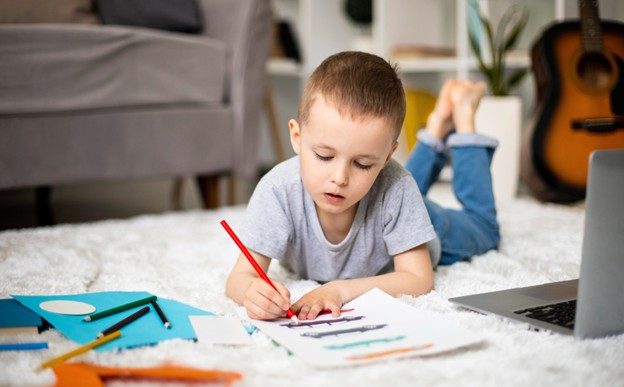
There’s a difference between learning and loving to learn. One checks the box. The other builds the world. As a parent, you don’t just witness your child’s education — you shape its emotional imprint. How they feel about learning today will echo into their decisions, their relationships, and the stories they tell about who they are. And the truth is, kids are born curious. But keeping that spark alive? That takes conscious design. It’s not about piling on enrichment. It’s about protecting what already wants to grow.
Follow Their Lead with Curiosity
Before you build a curriculum or sign up for a program, start by listening. Curiosity isn’t one-size-fits-all. For one child, it’s insects. For another, it’s the patterns in the carpet. Instead of assuming what they should be interested in, pause and simply ask what captures their attention. That question does more than open a conversation. It tells your child that their interests are worthy of notice. This kind of validation isn’t just feel-good. It signals to their brain that learning isn’t a performance — it’s an invitation.
Make Creativity Accessible
Creativity often gets boxed up as a talent when it’s really a muscle. And today, that muscle has new tools. For children who are drawn to color, motion, and ideas — but feel limited by their drawing skills — introducing tools like digital art and AI painting can open up whole new forms of expression. These aren’t shortcuts. They’re springboards. They turn curiosity into confidence by showing that what matters isn’t the technique. It’s the vision, the voice, and the courage to try.
Let Play Do the Heavy Lifting
Too often, play is treated as the appetizer, when it’s really the main course. Kids don’t need lectures. They need environments that let them experiment, break, fix, and question. And they especially need time to do it without being rushed to produce something polished. That’s where guided play can support problem-solving in a way that scripted lessons never will. The best play doesn’t just entertain — it gives them room to discover how the world works, on their terms, in their tempo.
Use Books to Build Empathy
Reading together doesn’t just build literacy. It shapes how your child sees people, differences, and dignity. Stories that explore topics like autism, mental health, or social justice — written with children in mind — offer powerful windows into experiences beyond their own. That’s why resources like Books2Inspire matter. They make it easy to find age-appropriate books that foster compassion, understanding, and a more curious heart.
Let Them Teach You
Nothing strengthens a child’s love of learning more than the feeling of competence. And few things create that feeling faster than flipping the roles. When your child explains a game, a recipe, or a random fact about volcanoes, resist the urge to jump in. Ask them to keep going. Their confidence swells when they’re seen as someone with insight to share. This is how you support their self-driven exploration. It’s also how they learn to trust their own questions, not just the answers fed to them.
Ask Better Questions
Praise is nice. But presence is better. Instead of saying “Good job,” ask what surprised them. Instead of “That’s smart,” ask how they figured it out. These small shifts matter because they change the direction of attention. They say: I’m here for your process, not just your result. When you ask questions that stretch thinking, you show your child that learning is layered. It’s not about being right. It’s about being engaged, reflective, and a little bit bold.
Loving to learn isn’t a given. It’s a practice — layered into the rituals of home, the tone of your questions, and the way you respond when something doesn’t land the first time. But the reward? It lasts. Because the child who grows up knowing they’re allowed to explore, tinker, ask, and revise is the one who never stops becoming.
(This blog entry was contributed by Patrick Young, Founder of AbleUSA. Able USA offers informational resources to individuals with disabilities to improve their quality of life. Their educational blog can be found here.)